
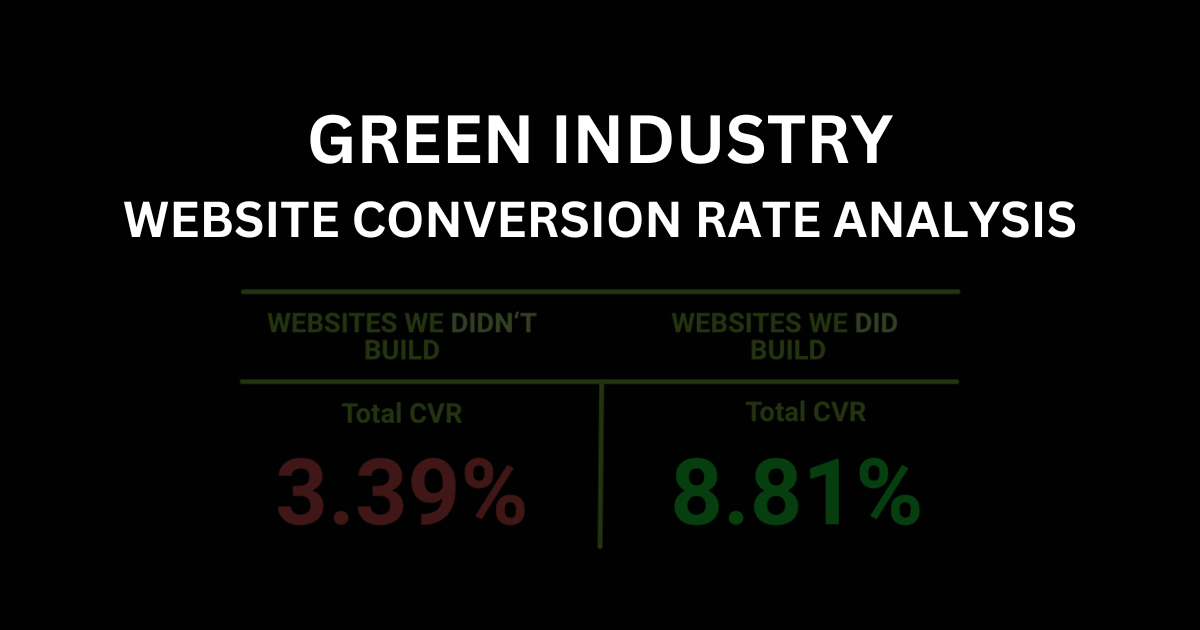
Here at Evergrow, we do digital marketing for websites we build, and sometimes for websites someone else built. Landscaping and lawn care companies often oppose building a new website, either because they just bought one recently, or they don’t want to change the design. It makes sense they want to save money, but it actually costs them money in the long run. Our sites convert better, and we have the data to prove it.
How We Measured the Data
First, we gathered a year’s worth of data between Q2 of 2025 and Q1 of 2026, then separated website traffic into organic and paid traffic groups. Organic traffic is SEO traffic, which means it’s relatively unaffected by external factors like door hangers or print mailers. That makes it a consistent benchmark. Paid traffic is also nice because it can be used to predict cost per lead at scale. For that, we used Google Search Ads, where we have the most data.
Second, we looked at website traffic from three different points of view:
- Sessions
- Engaged Sessions
- Clicks (only applied to paid traffic)
We did this because each angle gauges a different level of interest. If you think of it like people at a trade show, a session is like someone showing up. They might not stay very long, but they were there. An engaged session would be someone who talks to the booths. A click is like purchasing a ticket. All of these are valuable if you run a booth at the trade show.
Third, we looked at the individual conversion actions:
- Form submissions
- Phone calls
- Emails
- Call assets (only applies to paid traffic)
We track these conversion actions on all websites, so we wanted to look at them individually and not just combined.
Lastly, although removed here to not overwhelm you with information, we calculated both weighted and unweighted averages. Green industry businesses see more leads in the spring than winter, so it makes sense to give the spring appropriate weight compared to the other seasons.
Organic Sessions Average Website Conversion Rate
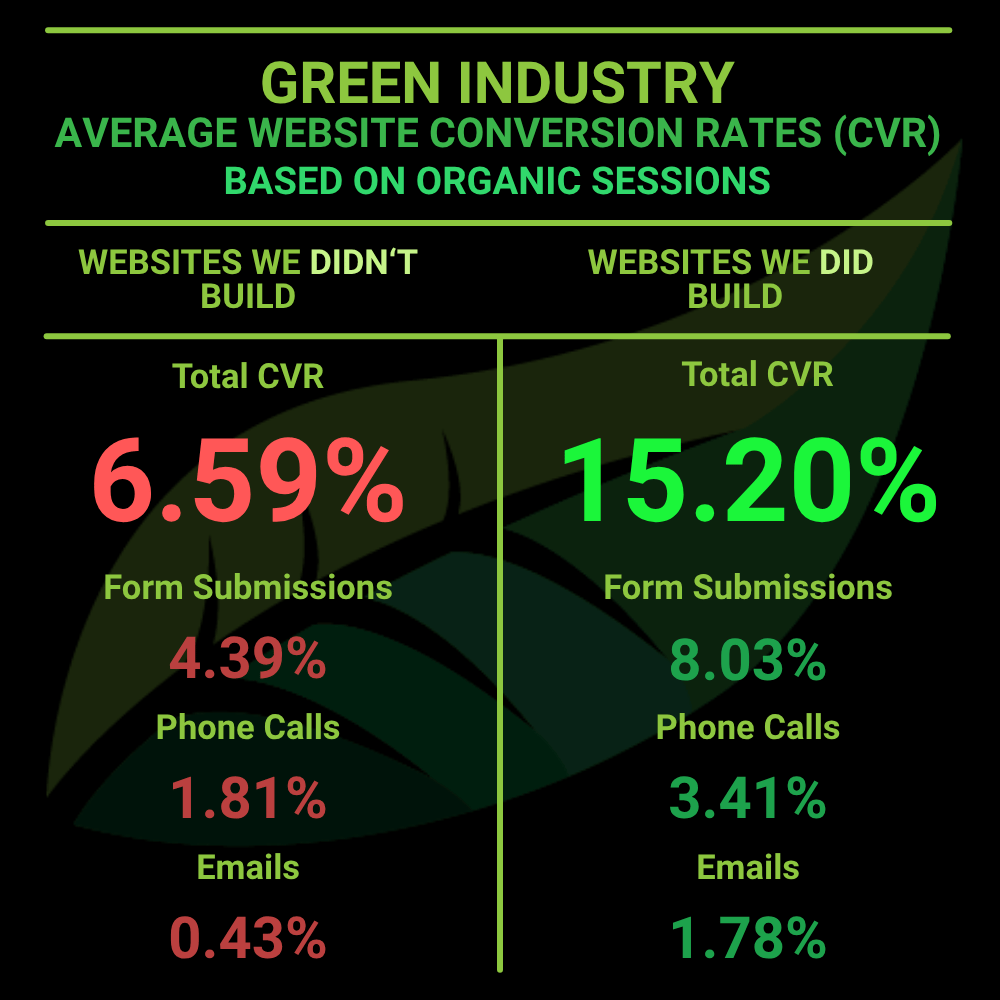
Image not showing? Click here to see a table.
Green Industry Average Website Conversion Rates (CVR) Based On Organic Sessions
| Average CVR | Websites We Didn’t Build | Websites We Did Build |
|---|---|---|
| Total | 6.59% | 15.20% |
| Form Submissions | 4.39% | 8.03% |
| Phone Calls | 1.81% | 3.41% |
| Emails | 0.43% | 1.78% |
Organic Engaged Sessions Average Website Conversion Rate
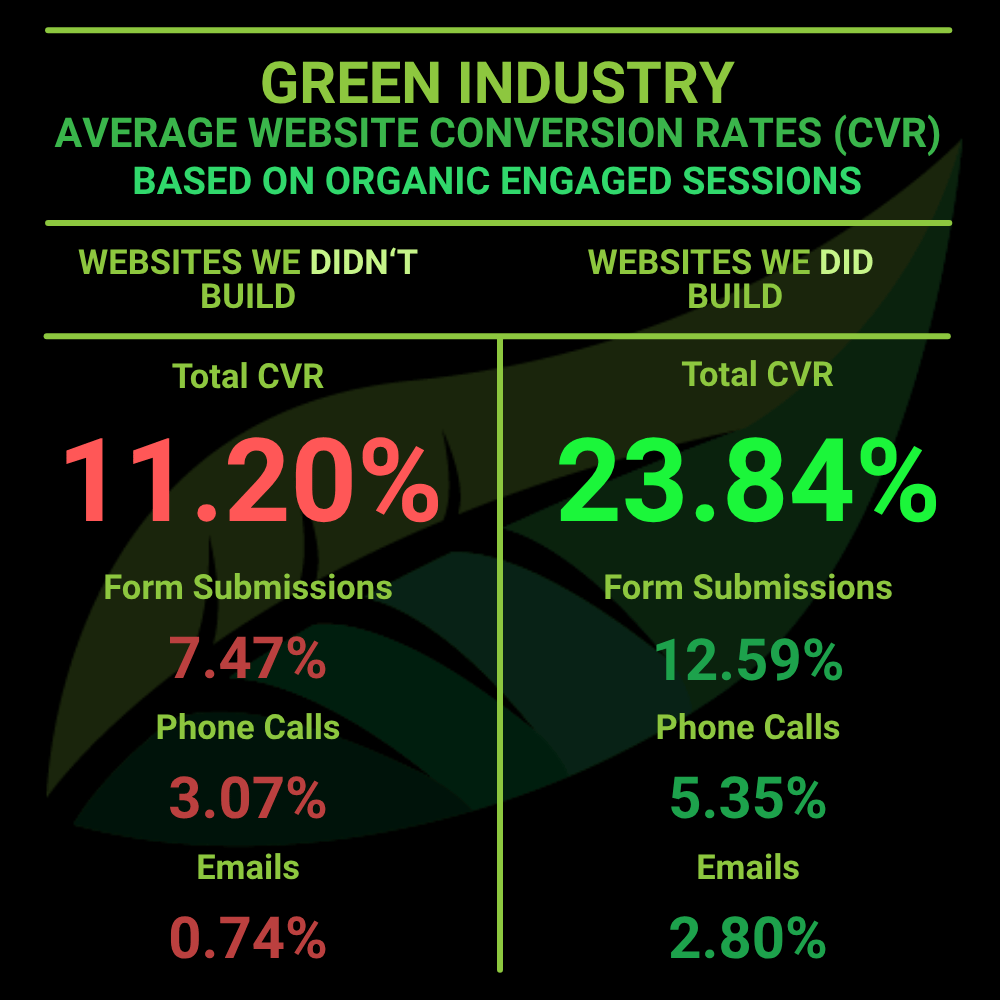
Image not showing? Click here to see a table.
Green Industry Average Website Conversion Rates (CVR) Based On Organic Engaged Sessions
| Average CVR | Websites We Didn’t Build | Websites We Did Build |
|---|---|---|
| Total | 11.20% | 23.84% |
| Form Submissions | 7.47% | 12.59% |
| Phone Calls | 3.07% | 5.35% |
| Emails | 0.74% | 2.80% |
Google Ads Sessions Average Website Conversion Rate
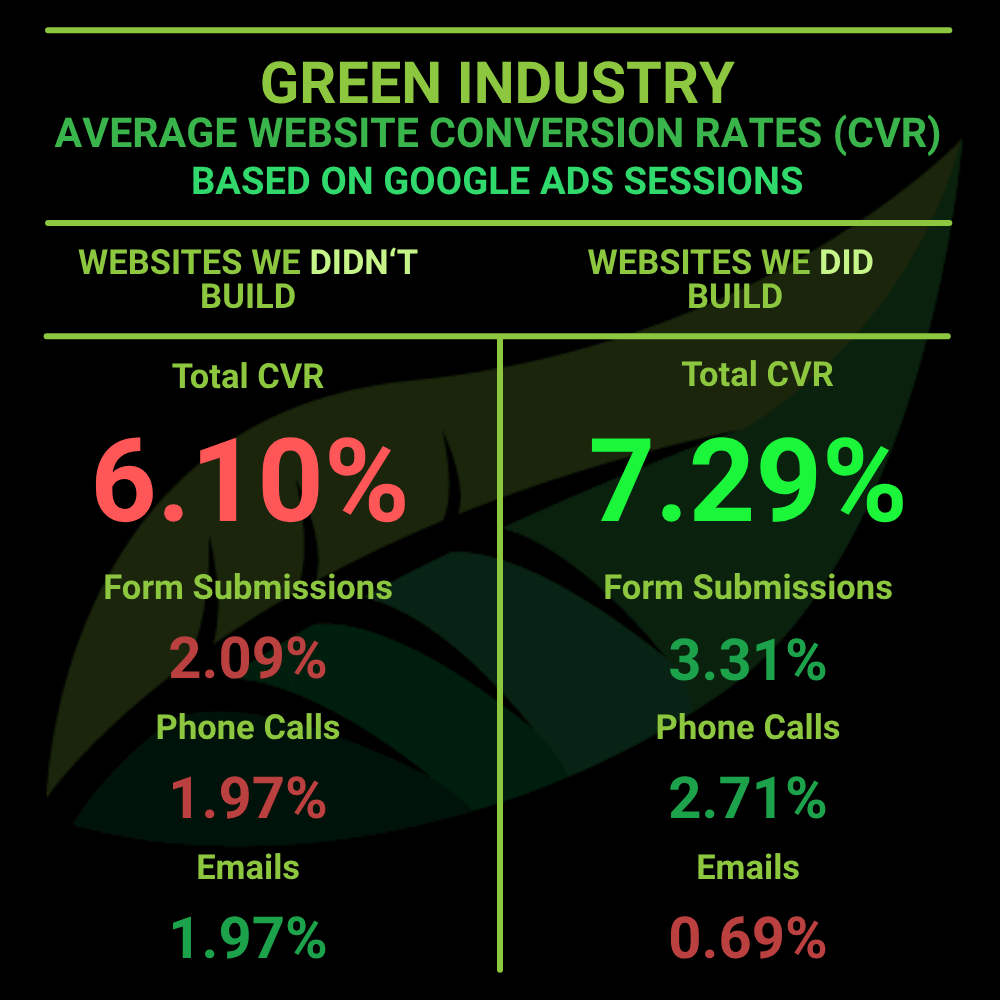
Image not showing? Click here to see a table.
Green Industry Average Website Conversion Rates (CVR) Based On Google Ads Sessions
| Average CVR | Websites We Didn’t Build | Websites We Did Build |
|---|---|---|
| Total | 6.10% | 7.29% |
| Form Submissions | 2.09% | 3.31% |
| Phone Calls | 1.97% | 2.71% |
| Emails | 1.97% | 0.69% |
Google Ads Engaged Sessions Average Website Conversion Rate
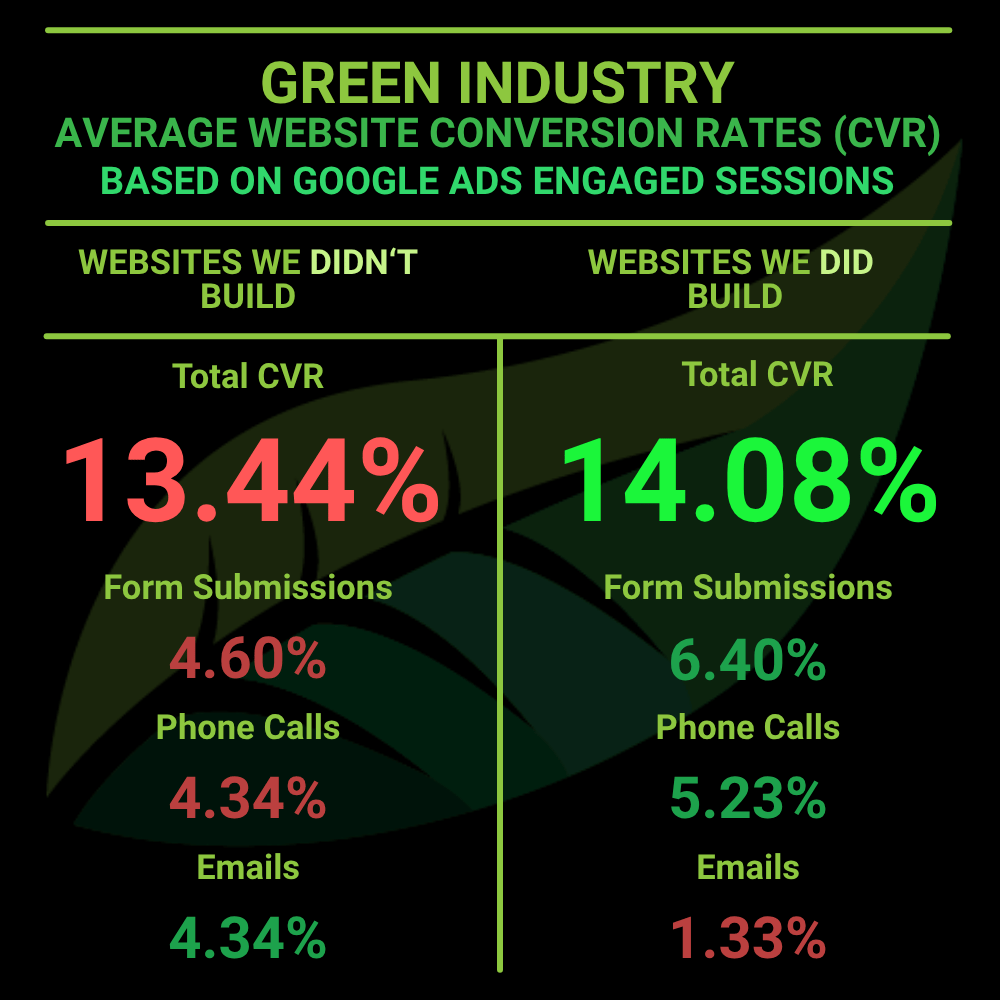
Image not showing? Click here to see a table.
Green Industry Average Website Conversion Rates (CVR) Based On Google Ads Engaged Sessions
| Average CVR | Websites We Didn’t Build | Websites We Did Build |
|---|---|---|
| Total | 13.44% | 14.08% |
| Form Submissions | 4.60% | 6.40% |
| Phone Calls | 4.34% | 5.23% |
| Emails | 4.34% | 1.33% |
Google Ads Clicks Average Website Conversion Rate
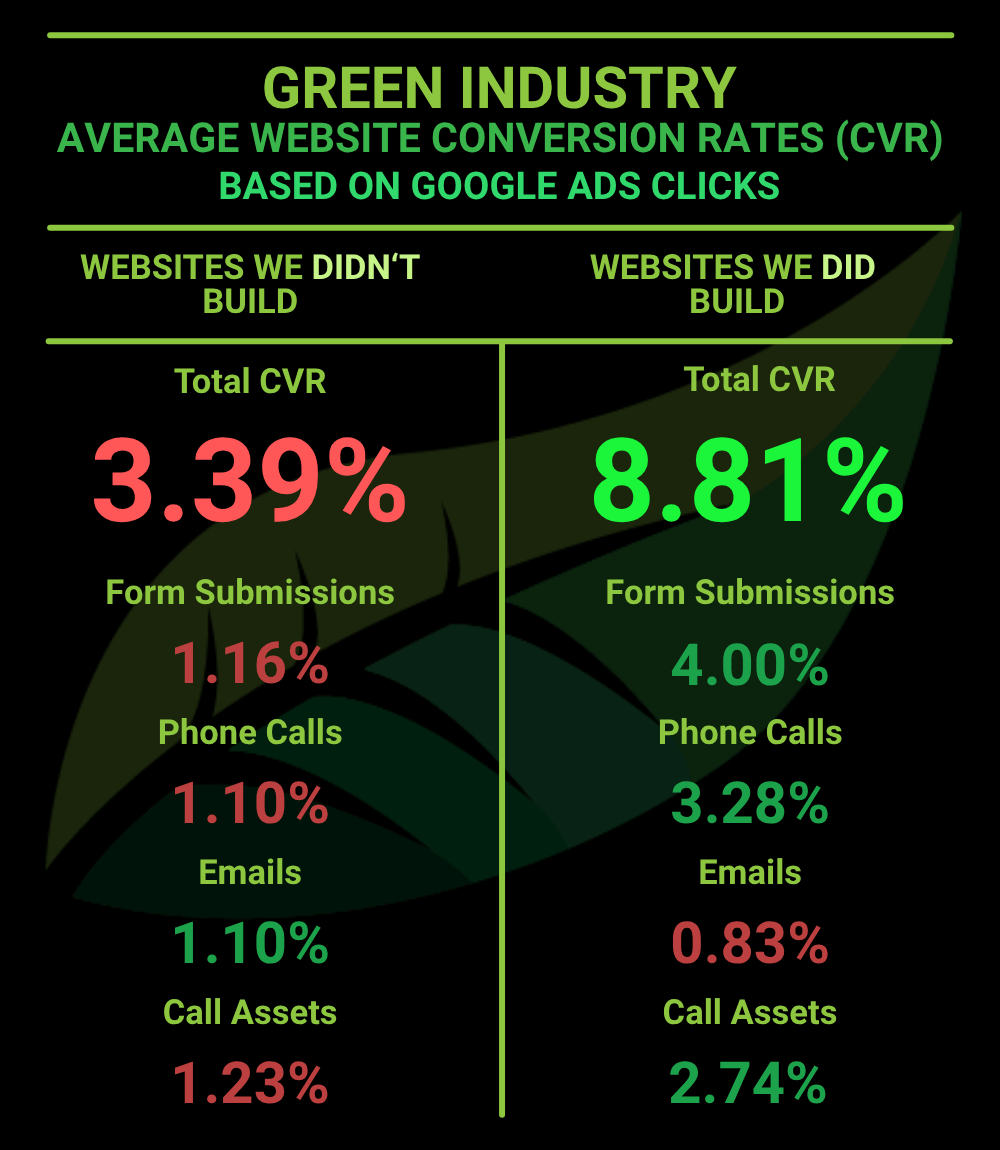
Image not showing? Click here to see a table.
Green Industry Average Website Conversion Rates (CVR) Based On Google Ads Clicks
| Average CVR | Websites We Didn’t Build | Websites We Did Build |
|---|---|---|
| Total | 3.39% | 8.81% |
| Form Submissions | 1.16% | 4.00% |
| Phone Calls | 1.10% | 3.28% |
| Emails | 1.10% | 0.83% |
| Call Assets | 1.23% | 2.74% |
What The data says
Organically, our websites convert twice as well ones we didn’t build. That means with the same amount of organic traffic, on average, clients who switch website builds would get double the number of conversions. It’s not a perfect world — website traffic doesn’t stay the same during a website migration, and there are always other factors, but our sites do perform better.
Google Ads is more complicated, and has a few points that stand out. Session data makes our edge seem modest, but click data looks more in line with organic traffic / SEO. One big reason is because not all Google Ads clicks become sessions. Call assets, for example, are phone calls from clicks on the ad that never visit the website.
This brings up an interesting point: Why are conversion rates better for call assets if they never visit the website? Our best guess is that Google likes our sites more. We know Google Ads uses landing page experience to determine Quality Score. The Quality Score affects Ad Rank, and Ad Rank impacts conversion rate. Ultimately, our call assets performing better could mean our website builds lead to a higher Ad Rank for Google Ads.
Finally, our conversion rates are higher for all conversions except emails. The simple answer is that we don’t focus on email conversions, and neither do our clients. Some clients even ask us to hide their emails when building the website. Landscaping and lawn care companies often consider form submissions and phone calls more valuable. They can be integrated with their CRMs, and provide more detailed tracking information. We measured email leads because we still track that data. Our websites just aren’t optimized for those leads in the same way, which the results show.
Summary
We didn’t set out to prove our websites convert better than others. This analysis came from noticing a problem with some of our clients and trying to identify the problem.
After looking at the data, we found that:
- On average, our websites convert more than twice as well organically (SEO) compared to other website builds.
- They also convert better overall for Google Ads traffic, and that means a lower cost per acquisition.
- Call asset conversion rates are better, which could be attributed to better Quality Scores in Google Ads.
- The only place conversion rate is lower is for emails from Google Ads, but emails aren’t as important for our clients.
We designed our websites to convert well, so this data collected wasn’t a total surprise. But what is it that causes them to convert better? Well, that’s a big topic on its own, and will have to be a blog post for another day.
0 Comments